CLAN
  • Home
  • What We Do
    • About CLAN
    • Our Five Pillars
    • Child Rights >
      • Asthma Rights Flyer
      • CAH Rights Flyer
      • Childhood Cancer Rights Flyer
      • Diabetes Rights Flyer
      • Epilepsy Rights Flyer
      • OI Rights Flyer
      • Newborn Screening Rights Flyer
      • RHD Rights Flyer
      • Resources by Language
    • Our Committee
    • Our Team >
      • CLAN Child Health Africa
      • CDOs
      • Youth Advisors
      • UN Youth Representatives
      • New Colombo Plan Scholarship Holders
      • Acknowledging people who have worked with CLAN
    • Partnerships
    • Policies >
      • Rights Protection and Inclusion >
        • Child Protection and Safeguarding Policy
        • Privacy & Disclosure Policy
        • Advocacy Guidelines
        • Protocol for Reporting Serious Incidents
        • Preventing Sexual Exploitation, Abuse & Harassment Policy
        • Racial Justice Policy
      • Participation, Empowerment and Local Inclusion >
        • Disability & Inclusiveness Policy
        • Gender Equity Policy
        • Child Inclusive Policy
      • Sustainable Change >
        • Building Capacity and Sustainability Policy
        • Drug Donation to Developing Countries Policy
        • Climate and the Environment Policy
        • Non-Aid & Development Activities Policy
      • Quality and Effectiveness >
        • Monitoring, Evaluation & Learning Commitment Policy
        • Project Design, Monitoring & Evaluation Policy
      • Collaboration >
        • Counter Terrorism Policy
        • Partnership Policy
      • Communication >
        • Communications Policy & Ethical Decision Making Framework in Communications
        • Guideline for Public Materials
      • Governance >
        • Transparency Policy
        • Risk Management Policy
        • Copyright and Intellectual Property Policy
        • Financial Impropriety Risk Management Policy
        • Financial Management Policy
        • Fundraising Policy
        • Overseas Transaction and Transfers Policy
        • Procurement Policy & Authorisations Delegations
        • Work Health & Safety Policy
      • Resource Management >
        • Human Resource Policy
        • Equal Employment Opportunity & Anti-Discrimination Policy
        • Emergency Management Policy
        • Safety & Security Policy
        • Staff Training & Development Policy
      • People and Culture >
        • Whistleblower Policy
        • Code of Ethics and Professional Conduct
        • Complaint Management Policy
        • Grievance & Dispute Resolution Policy
        • Conflict of Interest Policy
    • Annual Reports
  • Where We Work
    • WHO Africa Region >
      • Burundi
      • Kenya
      • Nigeria
      • Uganda
    • WHO Americas Region >
      • Brazil
      • Colombia
      • Mexico
    • WHO Eastern Mediterranean Region >
      • Pakistan
    • WHO Europe Region >
      • Ukraine
    • WHO South-East Asia Region >
      • Sri Lanka
    • WHO Western Pacific Region >
      • Australia
      • Fiji
      • Indonesia
      • Philippines
      • Vietnam
  • Communities
    • Asthma
    • Autism
    • CAH
    • Cerebral Palsy
    • Childhood Cancer
    • Diabetes
    • DMD
    • Epilepsy
    • Nephrotic Syndrome
    • Nodding Syndrome
    • Osteogenesis Imperfecta
    • RHD
  • News
    • UN Events >
      • Commission on the Status of Women >
        • CSW70
        • CSW69
        • CSW 68
        • CSW67
      • Commission for Social Development >
        • CSocD64
        • CSocD62
      • Science Summit >
        • 2026 Science Summit
        • 2025 Science Summit
        • 2024 Science Summit
      • UN Youth Events >
        • Youth Voices for Health & Gender Equity
        • ECOSOC Youth Forum 2025
      • UN High-Level Political Forum >
        • 2026 UN HLPF
        • 2022 UN HLPF
      • SIDS4
      • WHA 77
      • UNHLM on UHC
    • MATES4Kids
    • IndigenousNCDs
    • COVID-19 >
      • COVID-19 Infographics
      • COVID-19 Resources >
        • Vaccines
    • Blogs
  • Donate
  • Fundraisers
    • Rare Disease Day 2022
    • CAH Awareness Month 2022
  • Contact
Picture
Asthma
Picture
Congenital Adrenal Hyperplasia
Picture
Childhood Cancer
Picture
Diabetes
Picture
Epilepsy
Picture
Osteogenesis Imperfecta
Picture
Newborn Screening
Picture
Rheumatic Heart Disease

Children's Rights


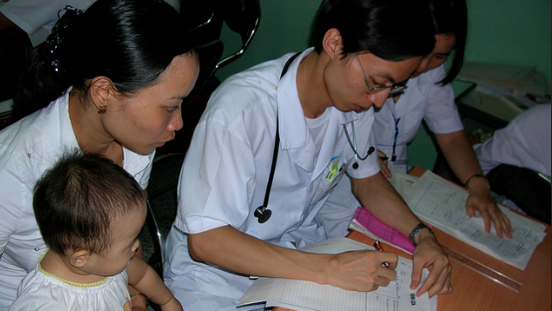
​Despite the fact that UN Convention on the Rights of the Child clearly states that all children with special health requirements have a right to the care needed to enable them to live the healthiest and most fulfilling life possible, the sad reality is that in resource-poor countries any child with any chronic health condition (that is, any health condition that lasts more than 3 months) is immediately susceptible to entirely preventable disability and death. CLAN believes these children have a right to health and life, and that more international attention should be given to this issue.

CLAN has developed a range of child-friendly rights flyers, please click on the icons above to learn more!


Children have a right to health! 


​​If CLAN is going to try and raise international awareness of the plight of children who are living with chronic health conditions in resource-poor countries, it is important for us to ask ourselves some tough questions... "Why should the world care?"... "Does it matter that children are sick and dying of preventable disease and disability?"...
Thankfully, the international community has agreed on some basic concepts relating to human rights, and it is useful to review these in relation to the issues facing children living with chronic health conditions in resource-poor settings. Examples include:
​
  • Universal Declaration of Human Rights (UDHR) – Article 25 – All persons have the right to health; specifically, children have a right to special care and assistance.
  • Article 3  of UN Convention on the Rights of the Child (UNCROC) – “in all actions concerning children…the best interests of the child shall be a primary consideration”.
  • Article 6 of UNCROC and Article 6 of International Covenant on Civil and Political Rights (ICCPR) – All children have a “right to life”.
  • Article 12 of International Convention on Economic, Social and Cultural Rights (ECOSOC) – everyone has the right to “the enjoyment of the highest attainable standard of physical and mental health”.  State parties should create “conditions which would assure to all medical service and medical attention”.
  • Article 24(1) and 24(2)(b) of UNCROC – children specifically have the right to good quality health care and the best health care possible.  State parties have a duty “to ensure the provision of necessary medical assistance and health care to all children”.
  • “Access to medicine is a fundamental element in achieving progressively the full realization of the right of everyone to the enjoyment of the highest attainable standard of physical and mental health” (12th Session of Human Rights Council (HRC) in 2009; ECOSOC Committee and Millennium Development Goal 8).
  • HRC resolution (A/HRC/12/L.23) calls for expert consultation on the “realisation of access to medicine” to achieve right of all to “highest ascertainable standard of physical and mental health”. This is the first step to securing formal recognition of the right to medicine.

We all have a role to play in effecting change.

CLAN has been working with partners from around the world to develop a series of Child-Friendly Rights Flyers, that help children and adolescents living with chronic health conditions learn more about their basic human rights to health and life. ​

Read more about our recent successes on advocating for child rights here.
Picture
Picture
Picture
CLAN is proud to produce and translate our child-friendly rights flyers into many languages. Find resources by language below:
English
  • Asthma here
  • Congenital Adrenal Hyperplasia here
  • Childhood Cancer here
  • Diabetes here
  • Osteogenesis Imperfecta here
  • Epilepsy here
  • ​Newborn Screening here
  • Rheumatic Heart Disease ​here
French - Française
  • Diabetes - Diabète here
Indonesian - Bahasa Indo
  • Congential Adrenal Hyperplasia - Hiperplasia Adrenal Kongenital here
  • Diabetes here
  • Osteogenesis Imperfecta here
Korean - 한국인
  • Osteogenesis Imperfecta - 골형성부전증​ here
Luganda
  • Epilepsy - Obulwadde bw’okusannyalala  here
Spanish - Español
  • Congenital Adrenal Hyperplasia -Hiperplasia Suprarrenal Congénita here
  • Diabetes here
Swahili
  • Rheumatic heart disease - Ugonjwa wa moyo wa baridi yabisi here
  • Congential Adrenal Hyperplasia - Hyperplasia ya Adrenal ya Congential​here
Vietnamese - Tiếng Việt
  • Diabetes - bệnh tiểu đường​ here
SUBSCRIBE TO OUR NEWSLETTER
MAKE A DONATION
HOME   |  WHAT WE DO  |  WHERE WE WORK  |  COMMUNITIES |  NEWS  |  DONATE | CONTACT

Acknowledgement of Country. In the spirit of reconciliation, CLAN acknowledges the Traditional Custodians of Country throughout Australia and the connections of Aboriginal and Torres Strait Islander peoples to land, sea and community. In particular, we acknowledge the Wallumedegal Peoples of the Eora Nation, on whose land CLAN (Caring & Living As Neighbours) is headquartered. We pay our respect to Elders past and present and extend that respect to all First Nations leaders around the world.

Picture
© CLAN INC 2019
​
CLAN (Caring & Living As Neighbours) Inc
ABN 30 897 322 928 | PO Box 996, Toronto  NSW  2283, Australia
[email protected]
Privacy Policy
​CLAN Logo Files | Donate | Subscribe to CLAN's Newsletter 
website by Peekaboo Creations 
Picture
  • Home
  • What We Do
    • About CLAN
    • Our Five Pillars
    • Child Rights >
      • Asthma Rights Flyer
      • CAH Rights Flyer
      • Childhood Cancer Rights Flyer
      • Diabetes Rights Flyer
      • Epilepsy Rights Flyer
      • OI Rights Flyer
      • Newborn Screening Rights Flyer
      • RHD Rights Flyer
      • Resources by Language
    • Our Committee
    • Our Team >
      • CLAN Child Health Africa
      • CDOs
      • Youth Advisors
      • UN Youth Representatives
      • New Colombo Plan Scholarship Holders
      • Acknowledging people who have worked with CLAN
    • Partnerships
    • Policies >
      • Rights Protection and Inclusion >
        • Child Protection and Safeguarding Policy
        • Privacy & Disclosure Policy
        • Advocacy Guidelines
        • Protocol for Reporting Serious Incidents
        • Preventing Sexual Exploitation, Abuse & Harassment Policy
        • Racial Justice Policy
      • Participation, Empowerment and Local Inclusion >
        • Disability & Inclusiveness Policy
        • Gender Equity Policy
        • Child Inclusive Policy
      • Sustainable Change >
        • Building Capacity and Sustainability Policy
        • Drug Donation to Developing Countries Policy
        • Climate and the Environment Policy
        • Non-Aid & Development Activities Policy
      • Quality and Effectiveness >
        • Monitoring, Evaluation & Learning Commitment Policy
        • Project Design, Monitoring & Evaluation Policy
      • Collaboration >
        • Counter Terrorism Policy
        • Partnership Policy
      • Communication >
        • Communications Policy & Ethical Decision Making Framework in Communications
        • Guideline for Public Materials
      • Governance >
        • Transparency Policy
        • Risk Management Policy
        • Copyright and Intellectual Property Policy
        • Financial Impropriety Risk Management Policy
        • Financial Management Policy
        • Fundraising Policy
        • Overseas Transaction and Transfers Policy
        • Procurement Policy & Authorisations Delegations
        • Work Health & Safety Policy
      • Resource Management >
        • Human Resource Policy
        • Equal Employment Opportunity & Anti-Discrimination Policy
        • Emergency Management Policy
        • Safety & Security Policy
        • Staff Training & Development Policy
      • People and Culture >
        • Whistleblower Policy
        • Code of Ethics and Professional Conduct
        • Complaint Management Policy
        • Grievance & Dispute Resolution Policy
        • Conflict of Interest Policy
    • Annual Reports
  • Where We Work
    • WHO Africa Region >
      • Burundi
      • Kenya
      • Nigeria
      • Uganda
    • WHO Americas Region >
      • Brazil
      • Colombia
      • Mexico
    • WHO Eastern Mediterranean Region >
      • Pakistan
    • WHO Europe Region >
      • Ukraine
    • WHO South-East Asia Region >
      • Sri Lanka
    • WHO Western Pacific Region >
      • Australia
      • Fiji
      • Indonesia
      • Philippines
      • Vietnam
  • Communities
    • Asthma
    • Autism
    • CAH
    • Cerebral Palsy
    • Childhood Cancer
    • Diabetes
    • DMD
    • Epilepsy
    • Nephrotic Syndrome
    • Nodding Syndrome
    • Osteogenesis Imperfecta
    • RHD
  • News
    • UN Events >
      • Commission on the Status of Women >
        • CSW70
        • CSW69
        • CSW 68
        • CSW67
      • Commission for Social Development >
        • CSocD64
        • CSocD62
      • Science Summit >
        • 2026 Science Summit
        • 2025 Science Summit
        • 2024 Science Summit
      • UN Youth Events >
        • Youth Voices for Health & Gender Equity
        • ECOSOC Youth Forum 2025
      • UN High-Level Political Forum >
        • 2026 UN HLPF
        • 2022 UN HLPF
      • SIDS4
      • WHA 77
      • UNHLM on UHC
    • MATES4Kids
    • IndigenousNCDs
    • COVID-19 >
      • COVID-19 Infographics
      • COVID-19 Resources >
        • Vaccines
    • Blogs
  • Donate
  • Fundraisers
    • Rare Disease Day 2022
    • CAH Awareness Month 2022
  • Contact